Registered Charity: 1160366

Registered Charity: 1160366
THE SERVANT LEADER
A pioneering leader with an unforgettable legacy
Pir Syed Mahroof Hussain Shah Arif Qadiri Naushahi
(1936 – 2024)
THE SERVANT
LEADER
Pir Syed Mahroof Hussain Shah Arif Qadiri Naushahi
Qazi Ishtiaq Ahmed
Published by:
Jamiyat Tabligh-ul-Islam
68-69 Southfield Square
Bradford BD8 7SN
Copyright 2025 by Qazi Ishtiaq Ahmed
All rights reserved. Except for brief quotations in this
book or any part thereof, must not be reproduced in any
form without permission in writing from the publisher.
First Published in Paperback 2025
Jamiyat Tabligh-ul-Islam
68-69 Southfield Square
Bradford BD8 7SN
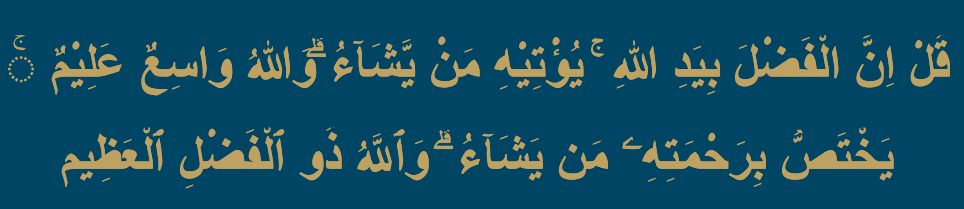
Say: All is in Allah’s hand, to give to whomever
He pleases. Allah is Vast, the Knower. He selects for His
Kindness whomever He pleases. Allah is most Gracious,
the Almighty.
Surah: Al- Imran, verses 73-74.
Translation: Dr. Musharraf Hussain –
‘The Majestic Quran’.
Contents
Introduction: Context
4
A Short Biography of Pir Syed
Mahroof Hussain Arif Qadiri
Naushahi (May Allah have
Mercy on him)
7
Pioneer of UK Mosques,
Pious Scholar Pir Syed Mahroof
Hussain Shah Naushahi
16
Statement from Council for
Mosques (Bradford) &
Khidmat Centres
20
Pir Syed Mahroof Hussain Shah
(May Allah have Mercy on him)
22
Joint Statement by
Bradford’s Interfaith Leaders
24
At a Glance: Synopsis of some
immediate reactions to Pir Sahib’s
passing away from Bradford’s faith
and civic leaders.
26
Part 2: Examples of Local and
National Media Coverage
27
Concluding Words
40
Introduction:
The Context
By Qazi Ishtiaq Ahmed
Pir Syed Mahroof Hussain Shah Arif Qadiri Naushahi (May Allah have mercy on him) returned to his Maker on July 17, 2024, at the age of 88, leaving behind an enduring legacy in advancing the religious well-being of British Muslims in Bradford, across the UK, and throughout Europe.
While he also established centres for religious education in Pakistan, his primary focus for over six decades was the foundation and development of mosques and centres for Islamic learning and culture in the UK and Europe.
From the very beginning of his life in the UK, Pir Sahib (May Allah have mercy on him) foresaw the challenges that South Asian Muslim migrants would face in their new environment. These individuals,mostly young, hardworking men, had come primarily to earn a living and support families back home. Pir Sahib was genuinely concerned that, away from the safety of their families and the faith-centric environments of their homelands, they were at risk of straying from their religious beliefs and practices. With more disposable income and lacking familial guidance,
many were susceptible to the distractions of a liberal social and cultural setting. To counter this, Pir Sahib believed that establishing mosques and centres for faith education and cultural preservation was of the utmost priority.
In the early years, there was little religious fervour and a noticeable reluctance to heed Pir Sahib’s call.
Yet, with modest resources but abundant charisma and perseverance, his message began to resonate.
Gradually, he inspired enough followers to establish Jamiyat Tabligh-ul-Islam (JTI) in May 1963, which led to the opening of the first JTI mosque at Southfield Square. This became the catalyst for the broader development of mosques and centres of Islamic learning across Bradford, the UK, and Europe.
Pir Sahib’s Janazah on July 19, 2024, was an unprecedented event.
Thousands filled the Central Mosque’s large car park, the mosque itself, and the adjacent Infirmary Fields. Attendees came from every corner of the UK, representing all denominations of the Muslim faith, as well as significant delegations from France, the Netherlands, Austria, and beyond. It was estimated that more than 20,000 people attended, making it the largest Muslim funeral in Europe,offering a powerful testament to Pir Sahib’s stature, reach, and enduring popularity.Pir Sahib’s influence transcended the Muslim community. Many nonMuslims from diverse faiths and backgrounds also came to pay their respects. Although deeply passionate about his faith, Pir Sahib was a charismatic and unifying figure who emphasised our shared humanity and
the universal values of respect and tolerance. The Right Reverend Toby Howarth, the Bishop of Bradford, addressed the gathering at the Central
Mosque, conveying heartfelt messages of sorrow and solidarity from the city’s other faith communities. He emphasised the magnitude of the loss, not only to Bradford but to the wider faith community.
Local and regional print and television media paid tribute to Pir Sahib, recognising the immense scope and lasting impact of his work in Bradford, across the UK, and beyond.
This compilation was assembled in just three days following the Janazah on July 19, and thus does not encompass everything that was said or published about His Eminence Pir Sahib’s legacy. However, I felt compelled to respond to the heartfelt
request of Brother Liaqat Hussain Naushahi, a devoted student, lifelong disciple, confidant, renowned scholar,and the principal biographer of Pir Sahib. He urged a swift review of media platforms to gather key testimonials, articles, messages, and anecdotes that reflect the profound significance of Pir Sahib’s legacy in Bradford and beyond.
I am confident that in the years to come, much more will be written and spoken about His Eminence, whose remarkable legacy will continue to inspire generations. Therefore, this humble and hastily prepared effort should be viewed as a prelude to the more comprehensive works that will follow.
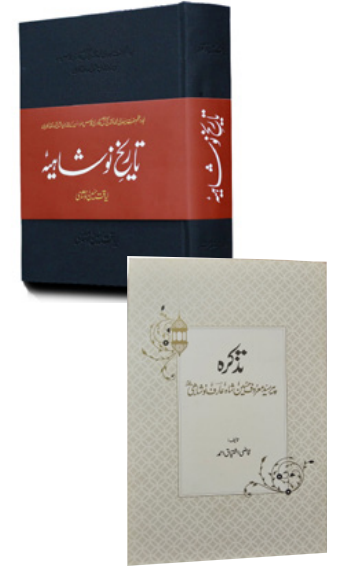
I also wish to acknowledge the monumental work “History of Naushahia” by Liaqat Hussain Naushahi, which meticulouslychronicles Pir Sahib’s unparalleled contributions to the spiritual and religious development of British and European Muslims. Additionally, I would like to reference my own concise biography of His Eminence titled Tazkara, a translation of which is included in this multifaceted compilation for our English-speaking friends.
Acknowledgements:
my gratitude goes to Zulfiqar Karim of JTI who oversaw the arrangements for the Pir Sahib’s Funeral, Rashad Bokhari Chief Executive Bradford & District Council for Mosques) Dr Sofia Buncy MBE. DL (Khidmat Centres), Muhammad Talha (Khidmat
Centres), Waheed Ali (JTI), Liaqat Hussain Naushahi for their guidance and Support.
Pir Syed Mahroof Hussain Shah
Arif Qadiri Naushahi
Qazi Ishtiaq Ahmed
(A short biography of Pir Sahib’s life journey and contribution in Britain based on a short biography written by me titled “Tazkira”. This is a slightly upgraded version in English)
In every era and society, there emerge individuals who, with their foresight, collective thinking, compassion, and ability to rise above temptations, differences, and obstacles, devote themselves selflessly to the welfare of humanity. These individuals, driven by a desire to attain the nearness and pleasure of Allah (SWT), work tirelessly without concern for personal comfort or convenience. Absorbed in divine love, they leave behind an enduring legacy that serves as a beacon for generations to come. Such individuals are rare, yet their impact is profound and lasting. Syed Mahroof Hussain Shah Arif Qadiri Naushahi (RA) was one such luminary.
While Pir Sahib (RA), as he was affectionately called by those near and far, initially came to this distant land like many of his contemporaries in search of livelihood, he did not see material gain as his ultimate purpose; rather, he recognised the growing loss of Islamic identity among Muslims in a foreign land as a pressing challenge and devoted himself to addressing it as part of his religious duty to Allah (Glory be to Him). In doing so, he built mosques and religious schools to propagate Islamic education and preserve the cultural and spiritual identity of Muslims. He regarded Ishq-e-Rasool (love for the Prophet) and Uswa-e-Rasool (the exemplary conduct of the Prophet) as central to this mission. He remained steadfast on this path, dedicating himself to fostering love and affection for the Creator in the hearts of people until his final days.
Childhood and Education:
Pir Syed Mahroof Hussain Shah Arif Qadiri Naushahi (RA) was born on June 20, 1936 (30th Rabi’ al-Awal 1355 AH) in the town of Chakswari, Azad Kashmir.
At birth, he was named Syed Mahroof Hussain. Throughout his life, various honorific titles and appellations were conferred upon him by those who recognised and admired the multifaceted nature of his work and his personality. These titles reflected his many innate attributes and contributions, including Abu Al-Sharaft, Arif, Sheikh al-Islam, Mubalagh-e-Islam, Benefactor of AhleSunnat, Pride of AhleSunnat, Thinker of Ahle Sunnat, and Siraj alSalikeen (Lamp of the Wayfarers).
Pir Sahib (RA) was the forth son of Qutb al-Aqtab Hazrat Syed Chiragh Muhammad Shah Naushahi, and the youngest of all siblings.
Pir Sahib’s initial education and upbringing were under the guidance of his father, who not only emphasized academic learning but also moral and ethical refinement. After his father’s passing, the educational journey continued under the supervision of Pir Sahib’s elder brother, Qutb al-Irshad Hazrat Pir Syed Abu al-Kamal Barq Naushahi (RA).This mentoring helped Pir Sahib (RA) progress through the stages of knowledge and personal development with great care and dedication.
After completing his matriculation (secondary education) in 1954 in the town of Chaksawari, Pir Sahib (RA) set forth on a path of sacred learning that would shape the course of his life. He began his religious studies at Madrasa Darul Uloom Ahle Sunnah in Jhelum, where he laid the foundations of Islamic scholarship. In 1955, he continued his journey at Madrasa Ghousia in Rawalpindi, studying more specialised subjects and further deepening his intellectual and spiritual growth. As part of this evolving journey—and as a significant next step in his education—he enrolled at Darul Uloom Ahsanul Madaris, also in Rawalpindi, where he studied from 1956 to 1961, completing his formal theological education while refining both his academic understanding and spiritual discipline.
Arrival in Britain:
In 1961, he embarked on a journey to Britain. On April 26, 1961, he arrived at London Heathrow Airport and initially settled in Birmingham. Two months later, on June 10, 1961, he moved to Bradford, where the local community was blessed with his leadership and guidance for the next six decades.
Upon his arrival in Bradford, he secured employment in an Oxenhope Mill near Keighley, commencing night shifts on June 27. For 25 years, he worked tirelessly while remaining deeply committed to his religious duties. His ability to balance physical work with his spiritual mission exemplified his unwavering dedication and faith.
The Propagation and Promotion of Islam:
In May 1963, alongside like-minded individuals, Pir Sahib co-founded Jamiyat Tabligh-ul-Islam. Through this platform, the founding of a mosque emerged as a central priority, serving as a vital cornerstone for spiritual growth, community unity, and religious devotion.
On February 27, 68 Southfield Square was purchased and shortly thereafter, on March 6, the adjoining property at number 69 was also acquired to expand the mosque. Once planning approval was granted on March 19, construction began, and Hafiz Muhammad Bashir was appointed as the first Imam of the Mosque.
During the 1950s and 1960s, a significant wave of migration brought people from Pakistan and Azad Kashmir to Britain in search of employment. However, Pir Sahib noticed a concerning indifference among his compatriots toward their religion. This deeply unsettled him, as he hailed from a devout family and had himself been a student of religious education. He could not remain idle in the face of this apathy. Others focused on material success, and Pir Sahib took it upon himself to reignite the religious consciousness of his community. Despite initial resistance and taunts from some who prioritized wealth over faith, he remained undeterred.
His unwavering commitment was rooted in a divine radiance—a pearl of enlightened wisdom and steadfast determination bestowed by Allah (Glory be to Him), setting apart His chosen servants with purpose and grace.
Only for the Love of Allah:
Pir Sahib (RA) cherished the divine gift of steadfastness and made the teaching and propagation of Islam his life’s purpose. Central to his mission was Ishq-e-Rasool (love for the Prophet), for he believed that obedience to the Prophet Muhammad (peace be upon him) was inseparable from obedience to Allah. This is a clear command in the Quran:
“Say, ‘If you love Allah, then follow me; Allah will love you and forgive you your sins. And Allah is Forgiving and Merciful.’” (Surah Al-Imran: 31)
Pir Sahib firmly believed that deepening one’s bond with the Messenger of Allah was essential for attaining closeness to Allah. This love finds its true expression in faithfully emulating the Prophet’s example, a principle profoundly emphasized in the Quran.
“Indeed, in the Messenger of Allah, you have an excellent example for whoever has hope in Allah and the Last Day and remembers Allah often.” (Surah Al-Ahzab: 21)
Pir Sahib’s life reflected this teaching, as he tirelessly worked to instil a love for the Prophet in the hearts of others. He understood that the ultimate purpose of human creation, as stated in the Quran, is worship to Allah:
“And I did not create the jinn and mankind except to worship Me.” (Surah Al-Dhariyat: 57)
To facilitate this worship, he prioritised the construction of mosques as spaces for believers to fulfil their spiritual obligations.
Pir Sahib (RA) dedicated his life to spreading the message of Islam and serving humanity. He overcame challenges with patience and humility, setting an example for others to follow. His legacy continues to illuminate the path for those seeking to live a life of purpose, devotion and service to Allah.
The Importance of Mosque:
The construction of mosques as centres for worship and learning is a fundamental duty of Muslims. By following the blessed example of Rasul Allah (peace be upon him), believers prostrate themselves before Allah and attain the true essence of worship. Thus, wherever Muslims travelled, establishing mosques became their top priority. This principle is exemplified by the establishment of Masjid-eQuba, the world’s first mosque, in Medina Shareef. Similarly, Muslim migrants from Yemen built a mosque in Liverpool in 1889, a place that serves as a source of inspiration, learning, and guidance in Islam. Mosques provide a gathering space for the community, fostering unity and serving as a vital foundation for achieving nearness to Allah (Glory be to Him), through love and adherence to the Sunnah of the Messenger of Allah (peace be upon him). Following this tradition, the Muslims of Bradford also prioritized the establishment of mosques as a cornerstone of their community.
The Teaching and Propagation of Islam in Bradford:
Pir Sahib (RA) began his mission with the establishment of a mosque, recognising that nearness to Rasul Allah (peace be upon him) and Allah (Glory be to Him) is unattainable without one. He viewed mosques as essential symbols of identity for believers and believed that preserving the Muslim faith required their establishment. Despite limited resources and a turbulent, often hostile environment, Pir Sahib undertook this mission with unwavering determination. His efforts quickly gained momentum, prioritising the construction of mosques in every British city where Muslims resided.
Today, Bradford alone is home to approximately 160 mosques and religious institutions dedicated to the promotion of Islam. Across Britain, there are an estimated 2,000 such institutions. Under the banner of Jamiyat Tabligh-ul-Islam, an organisation founded by Pir Sahib, 18 mosques and affiliated institutions in Bradford actively address the religious needs of the city’s Muslims. Pir Sahib’s vision extended beyond Britain, facilitating the establishment of mosques in various European countries, including Holland and France.
Many esteemed scholars (Mashaikh) and Islamic leaders (Ulama) in Britain began their work through the platform provided by Pir Sahib, later fulfilling their religious obligations in their unique ways. This enduring legacy is a testament to the Naushahi blessings and grace that accompanied Pir Sahib’s mission.
The establishment of mosques instilled a profound sense of religious confidence among Muslims, motivating them to take an active role in preserving and strengthening their faith for future generations. Today, mosques and Madaris (religious schools) play a pivotal role in maintaining this connection to faith, benefiting men, women, and children alike. They are central to the propagation of Islam, contributing to Britain’s high number of non-Muslim conversions to Islam. Pir Sahib’s movement holds a foundational role in this remarkable achievement.
The Arrival of Families and Challenges:
In the 1970s, families began arriving from Pakistan and Azad Kashmir. Previously, in the 1950s and 1960s, most migrants were men who came to Britain to work, intending to return home eventually. However, circumstances compelled many to remain, prompting them to call for their wives and children. By the late 1970s, significant numbers of Muslim children were enrolled in Bradford schools, leading to pressing concerns for Muslim parents:
1.Religious education in schools focused exclusively on Christianity, and Muslims wanted Islamic teachings incorporated into the curriculum.
2.School-provided lunches were not halal, leaving Muslim children unable to participate. Parents considered this
deeply unfair and advocated for halal meal options.
3.European languages were taught in schools, but parents from Pakistan and Kashmir demanded that Urdu and other community languages also be included in the curriculum to help their children retain a connection to their culture and heritage.
While the first two demands were primarily religious, the lack of a shared platform among Muslims made it challenging to address these issues collectively. Recognising this gap, Pir Sahib, along with Umar Hayat Warriach, Haji Sher Azam, Nazim Naqvi, Haneef Ansari, Abdul Haq Pandor, and Haji Tarfdar prominent mosque-connected figures established the Bradford Council for Mosques. This collaborative initiative became a crucial motivational step, inspiring the formation of similar platforms in other towns and cities.
Determination Towards Collective Unity:
In the early 1980s, through the collective efforts of the Bradford Council for Mosques, significant strides were made in incorporating Islamic teachings into the school curriculum. Halal meals for Muslim children were introduced and Urdu language, along with other community languages, was included in the curriculum. These steps marked important milestones, and the efforts of the Muslim community inspired other racial minorities to adopt similar provisions, fostering a sense of gratitude towards Muslims. This progress boosted the self-confidence of Muslims and reduced their sense of alienation, contributing to their recognition as an integral part of British society.
When the Bradford Council for Mosques was formed in 1981, it represented 17 mosques. Today, the organization encompasses 160 mosques and religious institutions, collectively addressing the issues faced by the Muslim community. Pir Sahib, unwavering in his doctrinal convictions, consistently advocated for collective efforts, demonstrating that Muslims can cooperate toward shared objectives while maintaining their distinct theological beliefs—an essential principle for fostering unity within the Ummah.
Key Milestones:
The Honeyford Affair:
Efforts by the Muslim community to protect their faith and cultural identity often faced severe backlash, exemplified by the Honeyford Affair. Ray Honeyford, a headteacher at the local Drummond School, which had a majority Muslim student population, expressed derogatory views in his writings. He argued that British culture, values, and artistic expressions were superior to those from Asia and Africa, and incorporating these values into schools would harm the traditional British way of life.
These remarks sparked strong protests from Muslim and other parents, leading to a prolonged campaign demanding Honeyford’s removal. The turning point came when parents withdrew their children from the school and, with support from the nearby Pakistani Community Centre, established an alternative school. This temporary measure was accompanied by a firm condition: the children would not return until Honeyford resigned.
The Pakistani Community Centre was the initiative of Mohammad Ajeeb CBE, the first Muslim Lord Mayor of Bradford, along with a number of city’s other prominent Pakistanis including Pir Sahib. I had the honour of serving the founding committee as the Joint Secretary General. On its completion, the Centre was inaugurated by Her Royal Highness Princess Anne.
Pir Sahib (RA), through his organisation, Jamiyat Tabligh-ul-Islam, provided unwavering support to the parents, guiding them throughout the campaign. Eventually, the collective efforts succeeded, and Honeyford was removed, bringing relief to the parents.
The Blasphemous Rushdie Affair:
One of the most significant challenges faced by British Muslims in the 1980s was the publication of The Satanic Verses by Salman Rushdie. The book was widely perceived as an attack on the sanctity and honour of the Prophet Muhammad (peace be upon him), his wives, and his companions. The offensive content sparked outrage among Muslims worldwide.
Pir Sahib (RA), a devout lover of the Prophet, could not remain silent. To verify the allegations, he acquired the book and brought his concerns to the Bradford Council for Mosques. A public meeting was convened at the Pakistani Community Centre, drawing senior Muslim scholars, mosque administrators, and community members. Under Pir Sahib’s guidance, the meeting resulted in a unanimous plan of action:
1.Condemnation: A complete boycott of the book.
2.Direct Action: Appeals to the author and publisher to cease publication and distribution.
3.Public Awareness: Efforts to remove the book from the market and stop its sale.
4.Government Advocacy: Demands for government intervention to prevent further harm to Muslim sentiments.
5.Sustained Campaigning: Peaceful protests to ensure continuous pressure against the book’s presence in the
market
Despite these efforts, the author, publisher, and government dismissed Muslim concerns under the pretext of freedom of expression. This indifference further inflamed the emotions of British Muslims, who eventually resorted to burning the book as a drastic measure. While this action was deeply distressing for Pir Sahib (RA), a lifelong collector and preserver of books, his love for the Prophet’s honour took precedence.
The book burning brought international attention to the controversy, compelling many libraries and stores to cease stocking The Satanic Verses. In several Muslimmajority countries, protests against the book intensified, leading to a global outcry. The movement also sparked religious and political consciousness among British Muslims, marking an important milestone in their journey to practice their faith with dignity, without intimidation and ridicule.
A Model of Righteousness and Guidance:
Pir Sahib (RA) and his organisation, Jamiyat Tabligh-ul-Islam, consistently opposed racial prejudice and hatred against minorities, raising a voice for truth and justice. While overseeing 18 mosques and religious institutions dedicated to education and propagation, Pir Sahib (RA) envisioned building a grand central mosque that would serve as a symbol of Islam’s permanence and beauty in Bradford. His vision was to create a structure that embodied Muslim pride and their rightful place in British society.
With unwavering trust in Allah (SWT) and despite financial and logistical challenges, a plot of land was acquired in Bradford’s city centre, and construction began on the Central Mosque. Over the course of two decades, this Turkish-style architectural marvel was completed, becoming a source of pride for both Muslims and the entire city. The mosque stands as a testament to Pir Sahib’s vision, wisdom, steadfastness, and deep faith in Allah. It symbolizes not only the greatness of Islam but also the enduring legacy of Pir Sahib (RA).
Faizaan-e-Naushahi:
The founder of the Naushahiya spiritual lineage is the renowned Islamic preacher of the 10th Islamic century, Qutb-ul-Auliya Mujaddid-eAzam, Hazrat Syed Haji Muhammad Naushah Ganj Bakhsh Qadiri, (quddisa sirruhu- may Allah sanctify his soul). A towering spiritual figure and esteemed religious scholar, he dedicated 77 years of his adult life to missionary work, addressing the religious and psychological needs of society. The lasting impact of his teachings and qualities continues to resonate even today.
Hazrat Syed Haji Muhammad Naushah’s contemporaries included eminent religious luminaries such as Hazrat Sheikh Ahmed Sirhindi (may Allah be pleased with him) and Sheikh Abdul Haq Muhaddith Dehlvi (may Allah be pleased with him), who both warmly acknowledged his invaluable contributions to Islam. According to the esteemed orientalist scholar Professor Sir Thomas Arnold, in his celebrated work The Preaching of Islam,over 200,000 Hindus embraced Islam under Hazrat Syed Haji Muhammad Naushah’s influence. Additionally, countless Muslims benefited from the spiritual grace of his circle.
Alhamdulillah, the river of Naushahi blessings has continued to flow, particularly under the guidance of Pir Syed Mahroof Hussain Qadiri Naushahi, a dedicated teacher of Islam. His work stands as irrefutable evidence of sincere and true Wilayah (sainthood).
The people of Britain, especially those in Bradford, are deeply indebted to the Naushahi spiritual tradition. Under the esteemed leadership of Pir Syed Mahroof Hussain Shah Qadiri Naushahi (RA), the founder of the order in Britain, religious efforts have thrived with unwavering devotion and remarkable enthusiasm for over half a century. Despite facing numerous challenges, this continued progress stands as a powerful testament to the enduring grace and resilience of Naushahi spirituality. To deny this truth would be a profound injustice to its invaluable legacy. During the 1950s and 1960s, when Muslims from Pakistan and India began arriving in Britain in search of employment, there were virtually no religious facilities available. Most migrants were preoccupied with earning a livelihood and alleviating poverty, leaving little time for religious observance. In such an unfavourable environment, the spiritual transformation witnessed under the guidance of Pir Syed Mahroof Hussain Naushahi (RA) was a remarkable testament to Pir Sahib’s unwavering dedication. As the custodian of the Naushahi order, Pir Sahib (RA) undertook the monumental task of rekindling religious awareness and guiding the Muslim community toward deeper faith and understanding. With resolute dedication, relentless effort, and steadfast resolve, he remained committed to this sacred mission for over sixty years. Along the way, he and his companions faced numerous challenges: limited resources, ridicule from detractors, intense opposition, and a generally irreligious environment. Confronting such obstacles with wisdom and perseverance required a leader divinely chosen and blessed by Allah (Glory be to Him), someone through whom spiritual guidance flowed seamlessly. This noble mission was carried out with distinction by Pir Syed Mahroof Hussain Naushahi (RA) and the people of Bradford. The illustrious movement established centuries ago by Mujaddid-e-Azam Hazrat Syed Haji Muhammad Naushah Ganj Bakhsh Qadiri continues to thrive, upheld by the enduring wisdom and profound influence of Pir Syed Mahroof Hussain Qadiri Naushahi (RA).Such a lasting legacy stands as a profound testament to the unwavering influence and divine purpose of the auliya (friends of Allah), who continue to remain spiritually present, guiding humanity with wisdom and enlightenment.
Acknowledging my limited understanding, I have made a humble attempt to highlight some aspects of the life and work of Pir Syed Mahroof Hussain Naushahi Qadiri (RA), a devoted teacher and beacon of Islam. I pray that someone more capable than I, such as Haji Liaquat Hussain Naushahi, will undertake the honour of writing a comprehensive book on Pir Sahib’s extraordinary life. Should that come to pass, it will be the fulfilment of my prayers.
I express my heartfelt gratitude to Haji Liaquat Hussain Naushahi, who generously provided invaluable insights about Pir Sahib (RA) and encouraged me to embark on this endeavour. Above all, I thank Allah Subhanahu wa Ta’ala(Glory be to Him, the Exalted for granting me the opportunity to pen this brief tribute to Pir Sahib (RA).
“Malfoozat
Mujaddid-e-Azam”
I had the privilege of reading Liaqat Hussain Naushahi’s book, Malfoozat Mujaddid-e-Azam, recently published by the Markazi Bazm-e-Naushahia, UK. I found it to be a comprehensive and impactful work on the multifaceted scholarly and spiritual personality of Mujaddid-e-Azam Syed Haji Muhammad Nausha Ganj Bakhsh Qadiri Qaddasallahu Sirrahu (May Allah Sanctify his soul).
Although, for someone like me with limited knowledge and unfamiliarity with the nuances of the Urdu language, certain parts of the text were quite dense, requiring multiple readings for better understanding. Nevertheless, the book’s content was so engaging that I never felt weary of reading. This may be due to the author’s devotion, diligence, and reverence, as well as the luminous personality of Mujaddid-e-Azam himself.
In any case, this is a beautifully written book—an insightful, powerful, and praiseworthy effort by the author on a significant subject. It stands as a priceless gift for those seeking spiritual enlightenment. I deeply thank “Malfoozat Mujaddid-e-Azam” Liaqat Hussain Naushahi for enabling us to benefit from this reservoir of blessings in such an excellent manner. May the Almighty bless his scholarly endeavours with further success.
In any case, this is a beautifully written book—an insightful, powerful, and praiseworthy effort by the author on a significant subject. It stands as a priceless gift for those seeking spiritual enlightenment. I deeply thank “Malfoozat Mujaddid-e-Azam” Liaqat Hussain Naushahi for enabling us to benefit from this reservoir of blessings in such an excellent manner. May the Almighty bless his scholarly endeavours with further success.
Pioneer of UK Mosques,
Pious Scholar Pir Syed
Mahroof Hussain Shah
Naushahi (RA)
Dr Musharraf Hussain OBE, DL
This is a tribute to a visionary leader the spiritual guide, Pir Syed Mahroof Hussain sahib, a true Muhammadi, servant of the blessed Mustafa. It seemed he had been assigned a special mission, mosque planting and building Islamic institutions in UK and Europe. A sincere civic leader of the Muslims. For six long decades wherever he went he distributed pearls of wisdom, delivered practical advice and inspired people to establish Mosques. His table talks, peppered with Punjabi and Persian couplets were eloquent and inspiring.
Late on 17th July 2024 I read this message from a mourning follower “With a heavy heart we announce the passing away of our Murshid, Pir Syed Mahroof Hussain Arif Qadiri Naushahi. May Allah grant him the loftiest paradise.” Fondly known as Pir Sahib by his disciples and admirers. The Senior reporter of the Telegraph and Argus Rowan Newman wrote on Thursday 18th July, “Tribute’s have been flooding in for a man whose “influence and guidance touched countless lives in Bradford”. The pioneer of the Masajid movement that he started in Bradford quickly spread throughout the UK and Europe. Naz Shah MP (Bradford West) said he was an “instrumental leader” whose efforts for the local community are “unmatched.” Zulfiqar Karim the former High Sheriff of West Yorkshire was his student and an admirer of his work, expressed his deep sorrow at the demise of his spiritual guide.
His funeral was attended by more than 20,000 people at the Iconic Westgate Central Mosque, in the city centre. The Quran proclaims, “Those who believed and did righteous deeds We will put their love in people’s hearts.” (Maryam: 96) The messenger said, “when Allah loves his servant, he tells Jibril to love him, so Jibril loves him and makes the announcement in the heavens that so and so is Allah’s beloved, therefore you should all love him.” [Bukhari] The large funeral was an outpouring of respect and reverence for Pir Sahib. Imams and scholars came from all over UK to pay their respect and their condolences they conveyed how they were indebted to their benefactor.
An incredible Muhajir, mujahid and mover. Pir Sahib (RA) Came to Bradford West Yorkshire in June 1961. As an economic migrant he sought work in a mill in Oxenhope, near Keighley. He worked night shifts. Before going to work he would teach young men who wanted to learn the Quran and practice Islam. Most of these young men were in their early twenties, hardly literate. They were in desperate need of guidance, the young Pir Sahib soon had a dedicated group of followers. He devoted his time and efforts to give to the spiritually thirsty. Afterwards he worked in a mill at Oxenhope, near Keighley. He lived at 18 Southfield square and stayed in that terraced house all his life, a sign of his frugal and simple lifestyle. He had been nurtured by the spring water of Islamic seminary, a saintly home, Sufi guides and strict Islamic way of living. So, he embodied the virtues of the beloved messenger’s simple lifestyle and followed the strict way of men of God. If we squeezed the essence of Pir Sahib’s life philosophy, in the words of Allama Iqbal it would be, “dominant yet gentle, holy yet compelling; these are the virtues of the faithful.”
Chaudhry Khadim Hussain his early follower said, “To make his Islamic work formal he held a meeting in 1963 to establish an organisation, called Anjuman Tabligh-ul Islam, which was later renamed Jamiyat Tabligh-ul Islam (JTI). It was this organisation that was instrumental in establishing dozens of Mosques. One of his friend Babu Mistry Khadim asked Pir sahib to open a Masjid in Lumb Lane area of Bradford. So, in 1965 he bought a house at 68 Southfield square and converted it to a Masjid.” Haji Liaquat a lifelong Lieutenant of Pir Sahib said “Then in 1970 he opened another Masjid at Browning Street. This mosque project moved with gusto to become a movement of mosque building. So, people from other cities sought his support. He was generous with his time and resources and readily helped them to buy properties to make mosques. Mosques were established in Oldham, Sheffield, Preston, Nottingham, Derby and Halifax. Jamiyat-Tabligh-ul Islam, is managing 18 mosques and supplementary schools in Bradford alone.
The friends of Allah
Islam is a living religion, it gives life to the seeker, its practitioners are living symbols of its truthfulness. We call them Auliya Allah, the friends of God, close to him, people who have dedicated themselves to God’s service, completely and utterly. They are serious about God, they live and die for his sake they love and hate for his sake; people whose motto is “my prayers, my sacrifices, life and death are all for the Lord of universe.” These people are living proof of God, evidence of Him, signs of God, who display his generosity and make his compassion tangible in the world. The Quran praises them “surely the friends of God have nothing to fear nor to grieve.” Faithful love the friends of God, trust them and for most Muslims love of God starts here. These people live Holy lives, lives of prayer, obedience, submission, and devotion. Following them develops the trust and love of Allah. Pir sahib was among these wonderful people.
Pir Sahib (RA) the Trail blazer:planting mosques in UK
His pioneering work included:
1. World Islamic Mission WIM
Pir Sahib (RA) was now an established and confident national Muslim leader in UK and wanted to unite the Ahlusunnah Wal Jamaat under one banner. So, he established the WIM in 1972. In this endeavour he was fully supported by Allama Arshad-ul Qadiri, Shah Ahmed Noorani and Abdul Sattar Khan Niazi, Allama Arifullah Shah Qadiri. Bulwarks of Indo Pak Sunni Muslims. The inaugural conference was held in the St George’s Hall Bradford, witnessed by thousands of his supporter. As the convener of World Islamic Mission, he selected Shah Ahmed Noorani as the President. Soon after he bought the Building for the WIM’s college on Shearbridge Road Bradford. I have fond memories of spending time there as student. Unfortunately, Pir Sahibs big dream of seminary where future scholars would be trained was not realised due to internal strife.
2. Inviting and settling Imams and scholars from IndoPakistan
In the seventies there were hardly a handful of Imams and scholars, Pir Sahib the visionary knew his dream of educating the Muslims cannot be fulfilled without scholars. Consequently, he sponsored, guided, and helped many scholars and imams to make UK their home.
3. His vision and dedication
His vision and dedication laid the foundations for a stronger, more connected Muslim community, fostering spiritual growth and unity.
Pir Sahib (RA) was concerned about the Muslims and the wider society. So, he had to engage with the statutory bodies to solve the issues of Halal food in schools, swimming costumes and hijab. So, in consultation with Muslim leaders, he became the founding member of the Bradford Council for Mosques, in 1981. An organisation that has since flourished and spawned many imaginative civil society projects. The spokesperson for the Council for Mosques said: “It is with profound sorrow and deep regret that we announce the passing of Pir Syed Mahroof Hussain Shah Arif Qadiri Naushahi… he left behind a legacy that will be cherished and remembered by many.”
4. A man of books
Pir Sahib was a man of books, his house is a library. He believed in the power of Islamic education. He knew its transformative effect; it nurtures goodness in the seeker. So, he was committed to it. He took every opportunity to make education available. So, in every masjid he established a Quran school, a madrassa, where thousands of children come to learn their religion.
Pir Sahib’s work in Pakistan
Pir Sahib was born in Chaksawari near Mirpur Azad Kashmir in 1936 to a wonderful spiritual family of Syed Naushah Ganj Bakksh. He was a patriot in true sense, loved Pakistan and longed for its prosperity. He often prayed for its security. No wonder in his will he wanted to be buried in Pakistan. So, as early as 1968 he established a seminary and Masjid in Daulat Nagar Gujarat. And in 1971 another religious seminary and masjid in Chaksawari Mirpur. Which now extends over an acre.
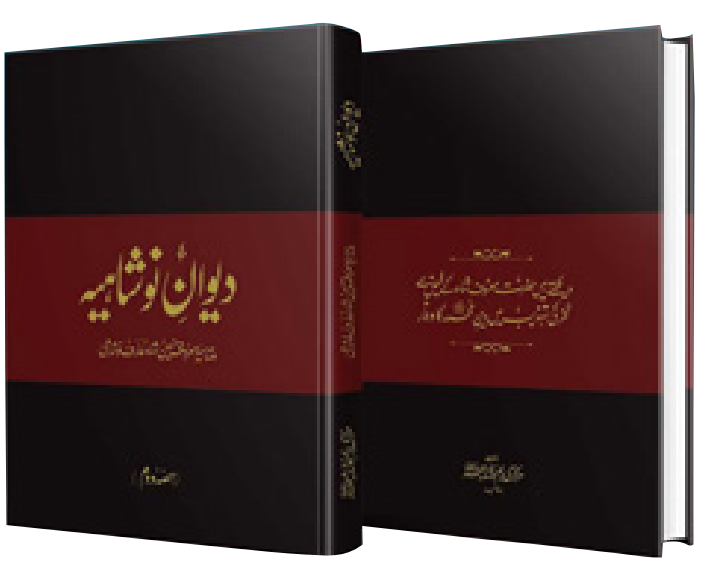
Pir Sahib was a Punjab, Urdu and Persian poet. His poetry is published in two volumes, entitled Divan-eNaushahia.
Pir Sahib was brilliant at winning peoples’ hearts and minds, he could motivate them to spend their wealth in the path of Allah. He raised funds regularly for his projects in UK and Pakistan. A successful example is the fundraising for the publication of a 32 volume Fatawa Rizwiya written by Ala Hazrat Fazal Barelvi. In 2004 he invited Mufti Abdul Qayyum Hazarvi from Lahore and together they toured UK and raised £48,000 for this project.
A spiritual guide and teacher of moral and simple lifestyle.
When you see someone wearing a tall orange topi, a cap, assume he is the follower of Pir Sahib. These saintly and pious souls were guided by him, Haji Liaqat his beloved disciple and Khalifa said, “Pir Sahib taught his murids to follow the shariah and practice the sunnah of the Master Muhammed (PBUH). So, they became devout and good Muslims. Like Rumi the troubadour of love he would tell them, “When you keep in your bounds, to God you’re dear; don’t overstep the mark! is that quite clear!”
The rich life and work of this British-Pakistani, saint-scholar and Yorkshire millworker who left such profound mark on the landscape of Britain will be remembered and researched by future social scientists. It was a remarkable life and legacy. Pir Sahib leaves behind two sons, Sahibzada Syed Ahsan and Syed Hassan Shah. Today not just two sons are mourning but thousands of people. I too mourn his demise, we will miss this pious, sufi, saint, scholar and mentor. May Allah rest his soul in peaceful Firdous. Ameen
Personal Communications and Experience.
This article is based on my personal encounter with Pir Sahib and communication with his close disciples: Haji Liaqat Hussain and Ch Khadim Hussain
Pir Syed Mahroof
Hussain Shah (RA).
By Waheed Ali
(A member of Jamiyat Tablighul-Islam’s Central Mosque and a Board Director of Council for Mosques Bradford & District)
Pir Sahib was born in Chakswari, Mirpur district, to a noble family with a distinguished Sufi heritage. The family was not affluent but placed a high premium on education in an era and area riven by poverty and overwhelming illiteracy. Pir Sahib proved a diligent student who enjoyed stellar educational attainment. A particular early inspiration was his elder brother, Pir Syed Abul Kamal Barq (RA), a renowned scholar who had a profound influence over a young impressionable Pir Sahib (RA) who, along with this father, guided Pir Sahib (RA) towards a lifetime of piety and rigorous religious service.
Pir Sahib moved to UK in his early adult life. A man of steadfast faith, Pir sahib strictly observed his daily prayers and was happy for his employer to dock pay for time spent praying during work hours. This immediately set him apart from his peers in his approach to life in the UK. Whereas, others were content to accept their place in the environment in which they found themselves, Pir Sahib (RA) sought to re-engineer and mould that engagement with the environment.
On his arrival in 1961, Pir Sahib (RA) made Bradford his UK home. The 60’s was a decadent, indulgent and hedonistic era, fraught with temptation for young men from hitherto conservative, modest backgrounds who, in the absence of any guidance and support, were particularly vulnerable to fall into the many dens of vice. Pir Sahib (RA), recognised a need for religious guidance and pastoral support and set about filling this void.
Pir Sahib would work night shifts and engage in religious teaching and preaching during the day. Despite, his obvious exertions and personal sacrifices, initially, there was a reluctance to engage with his call. His message was often met with a lukewarm response and sometimes outright hostility: many felt they were in the UK to make a quick buck to ease the abject poverty faced by their families and return home. So, Pir Sahib’s endeavours to provide religious education was a needless distraction and, furthermore, after enduring long arduous hours toiling in the textile mills, they had little energy for extra-curricular lessons in Islamic theology and etiquette.
However, with perseverance and personal charisma the message began to permeate and the mosque movement began to gain traction in earnest. This routine of textile work during the night and religious work during the day continued for 25 years. There are countless many who still reminisce about their experiences to their children, and increasingly their grandchildren, of how Pir Sahib taught them Quran and religious education at Southfield Square. Some fondly refer to the Southfield Square mosque as the ‘Mother of Mosques’ Pir Sahib (RA) was a pioneer who campaigned and brought into focus needs of the Muslim community. He would organise religious gatherings; send out reminders to mailing list he had compiled to inform people of important religious dates such as Ramadan and Eid. Mosques provided an important focal point for religious activity and cultural space for the Muslim community, something Pir Sahib acutely recognised. So, as the Muslim community began to grow and disperse, Pir Sahib (RA) arranged collections to fund mosques in new population centres. Pir Sahib was instrumental in lobbying to help secure rights for Muslim workers to be allowed time for daily prayers and days off for religious celebrations, such as Eid.
Much has been written on Pir Sahib’s contribution to the mosque movement. However, comparatively little time is devoted to his character. He was a humble man who spent his entire adult life living and working from a modest terraced house. Throughout his life there, the house was a hive of activity. In the early days, aside from a forum for theological discussion, it was a focal point for poorly educated young men who needed help with basic admin and form-filling which gradually shifted to advice on more modern issues confronting individual family units, as well as issues and matters affecting the wider community. On any given day and time Pir Sahib’s house could effortlessly and seamlessly shift between an advisory council to a court of law; from a boardroom to a place of peace and solace. All were welcome; complimentary tea and biscuits served at all hours.
Today, Bradford, with some 160 mosques and faith schools dotted across the district, is called the City of Mosques. Pir Sahib (RA) was absolutely a chief architect of this phenomenon; the vast majority of today’s mosque leaders can trace a connection back to Pir Sahib (RA)and his early work. Pir Sahib (RA) played a pivotal role in the establishment of Bradford Council for Mosques. The organisation brought together disparate Muslim communities under a single umbrella to better articulate needs of Bradford’s collective Muslim population. The organisation was the first of its kind in the UK and provided a blueprint for many others that have sprung up since.
Pir Sahib (RA) leaves a legacy of a Muslim community that is assured and confident, proud of its heritage but respectful of fellow citizens. A wider Bradford community that enjoys harmonious inter-communal relations, that are an envy of many a city across the UK and, indeed, the world. The Muslim community of today is unrecognisable from that of the 1960s. The Muslim community of yesteryear was necessarily poor and ill-educated, today’s Muslim community is increasingly, highly educated with a burgeoning middle-class. Though, the social demographics and dynamics have changed immeasurably, the Muslims of today face formidable challenges, just like their predecessors. Nonetheless, thanks to the foundations Pir Sahib (RA) helped lay, the community is much better equipped to confront, address and resolve those challenges.
Pir Sahib (RA) will always be remembered for helping to shape Muslim life in the UK. However, his influence spanned far beyond UK shores, helping nascent Muslim community’s set-up religious centres and gain foothold in Europe, most notably Netherlands and France. Pir Sahib (RA) was also very active in Pakistan, setting up a number of mosques and madrassas across several different cities. His most notable institution is the Jamia Naushahia, a sprawling complex spread across some 15 acres in central Jhelum, which amongst other things, provides free school boarding for around 200 impoverished children, generously taking care of all their needs from education to healthcare to recreational requirements.
The Janazah of Pir Sahib perhaps best captured the essence of the man. It was an unprecedented event. Attendees fanned out across the full length and breadth of Bradford Central Mosque’s enormous car park; inside the Mosque and onto the neighbouring Infirmary fields. Attendees represented all corners of the UK and all denominations of the Muslim faith. There was significant representation, from continental Europe, too, with attendees from France, Netherlands and Austria. West Yorkshire Police estimated attendance at 20,000 plus, which makes it the largest Muslim funeral in Western Europe ever. A reflection of the high esteem in which Pir Sahib is held and a fitting tribute to a unique individual.
In a fast changing capitalist world, Pir Sahib (RA) tethered himself to a conservative, austere, and respectful life, in the best the traditions of Islam. The Muslim community can learn much from the life of this iconic but humble leader who spent his entire adult life living and working from a modest terraced house in inner city Bradford, completely unimpressed by the allure of wealth. A true man of God, indeed. Allah (Glory be to Him) raise his ranks and grant him a place in the highest echelons of Jannat-ulFirdous. Ameen summa ameen.
The Joint Interfaith Statement on the passing of Pir Syed Mahroof Hussain Shah
“Colleagues from different religious faiths in Bradford, we send condolences to our Muslim friends and colleagues following the sad death of Pir Syed Mahroof Hussain Shah.
We recognise the extraordinary pioneering contribution that he made to our City and District, and the deep loss that will be felt by so many people in Bradford and much more widely. You are in our prayers.”
Dr Kuldip Kaur Bhari, OBE, DL, Bradford Gurdwaras Ravindar Dharni, Bradford Hindu Council The Right Reverend Dr Toby Howarth, Bishop of Bradford Richard Stroud, OBE, Bradford Synagogue

At a Glance
Acknowledgments and tributes regarding the many virtues and attributes of Pir Sahib’s personality and the significance of His Eminence’s achievements and contributions.
A “revered spiritual leader whose influence and guidance touched countless lives in Bradford, the UK, and around the world”. His presence was a constant source of inspiration, and his contributions to our community will be deeply missed,” (Bradford Council for Mosques).
“As colleagues from different religious faiths in Bradford, we send condolences to our Muslim friends and colleagues following the sad death of Pir Syed Mahroof.
We recognise the extraordinary pioneering contribution that he made to our city and district, and the deep loss that will be felt by so many people in Bradford and much more widely”. (Faith Leaders in Bradford.)
“He will be remembered for many, many years to come. I knew him for many decades and so many wonderful memories come to mind. He was a great man who always worked very hard and made a phenomenal difference.” (Sher Azam MBE, Co-founder and the former president of Bradford & District Council for Mosques). “A long-time friend whose enormous contribution to the promotion of Islam in Bradford, Britain and Europe that I always appreciated and admired. He had the God given gift of immense intelligence and knowledge of Islam that he used to spread the message of Islam throughout his earthly life. Being a great spiritual Leader, he was highly respected by Muslims and non-Muslims alike. Peer Syed Mahroof Hussain Shah Arif Qadiri Naushahi was blessed with humbleness, modesty and humility”
(Abridged). (Mohammed Ajeeb CBE, former Lord Mayor of Bradford & Distract Council.) “Pir Sahib’s endearing personality resonated with all generations, not just the first generation of arrivals here when he first set up the Mosque. He was very revered for his values, for his servitude to God, but also servitude to the community and, most of all, for his resilience. He was very much somebody you could reference from, somebody to take advice from, and a very wise man. His (appeal) was absolutely immense across the UK, across the world.” Dr Sofia Buncy MBE, DL)
“We are deeply saddened to hear about the passing of Hazrat Pir Syed Mahroof Hussain Shah. His contributions to the Muslim community in Bradford and beyond have been immense, and his legacy will continue to inspire many”. (Cllr Mohammed Shafiq, the Deputy Mayor of Bradford & District).
“Extremely sad news to hear about the passing of Pir Syed Mahroof Hussain Sahib. He was an instrumental leader that brought together not only the local Muslim community in Bradford but many across this country. His efforts to the local community are unmatched and will be remembered for generations to come.” (Naz Shah MP for the Bradford West).
“He was an instrumental leader whose leadership, vision, dedication and perseverance bought together not only the local communities in Bradford but many across Britain”. (Imam Qari Mohammed Asim, Senior Imam at Makkah Masjid, Leeds.).
“People loved him. I’ve been talking with colleagues from the Hindu, Sikh, Jewish, Christian traditions…. We recognise just what a loss this is for Bradford, and we want to pay our respect and show our condolences to our Muslim brothers and sisters. At a time when religions sometimes are deeply misunderstood, how important is for a figure like this to be honoured, who represent not his religion but faith in its purest form. -abridged.” (Right Reverend Toby Howarth, Bishop of Bradford).
Writing for the T & A on the 18th July Rown Newman, the day after Pir Sahib’s departure, a senior reporter with the newspaper carried the headline:
Tribute to Pir Syed Mahroof Hussain Shah Arif Qadiri Naushahi.
“TRIBUTES have been flooding in for a man whose “influence and guidance touched countless lives in Bradford”. Pir Syed Mahroof Hussain Shah Arif Qadiri Naushahi recently died following a prolonged illness.
Affectionately known as Pir Sahib, he was a pioneer of the Masajid movement, which began in Bradford, and went on to inspire the development of mosques throughout the UK and Europe.
Around 10,000 people are expected at his funeral which will take place at the Jamiyat Tabligh-ul-Islam Bradford Central Mosque, on Westgate in the city centre, this Friday at 7.15pm.
In Bradford, he was instrumental in establishing Jamiyat-Tabligh-ul-Islam, an organisation that oversees the development and management of 18 mosques and supplementary schools. Pir Sahib was also a founding member of the Bradford Council for Mosques.
Part 2
Media Coverage

The Print Media (SIC)
Naz Shah MP (Bradford West) said he was an “instrumental leader” whose efforts for the local community are “unmatched”.
She said: “Extremely sad news to hear about the passing of Pir Syed Mahroof Hussain Sahib.
“He was an instrumental leader that brought together not only the local Muslim community in Bradford but many across this country.
“His efforts to the local community are unmatched and will be remembered for generations to come.
“A towering figure who always gave me time. I pray that he is granted a high rank in Jannah tul Firdous and my thoughts and prayers are with all his family and loved ones.
” A spokesperson for the Council for Mosques said: “It is with profound sorrow and deep regret that the Bradford & District Council for Mosques announces the passing of Pir Syed Mahroof Hussain Shah Arif Qadiri Naushahi.
“Pir Sahib, as he was affectionately known, was a revered spiritual leader whose influence and guidance touched countless lives in Bradford, the UK, and around the world.
“He passed away following a prolonged illness, leaving behind a legacy that will be cherished and remembered by many.
“Pir Sahib was a pioneer of the Masajid movement, which began in Bradford and went on to inspire the development of mosques throughout the UK and Europe.
“His vision and dedication laid the foundations for a stronger, more connected Muslim community, fostering spiritual growth and unity. “In Bradford, Pir Sahib was instrumental in establishing JamiyiatTabligh-Ul-Islam, an organisation that oversees the development and management of 18 mosques and supplementary schools.
“His commitment to education and spiritual leadership helped shape the lives of many young Muslims, providing them with the guidance and support needed to thrive.
“As a founding member of the Bradford Council for Mosques, Pir Sahib’s wisdom and spiritual insight were invaluable.
“His presence was a constant source of inspiration, and his contributions to our community will be deeply missed.
“Thousands of his followers found solace and direction in his teachings, and his absence leaves a void that will be felt by all who knew him.
“The Bradford & District Council for Mosques extends its heartfelt condolences to Pir Sahib’s family, his congregation, and the entire community.
“We share in your grief and stand together in this time of mourning.
“Pir Sahib’s legacy of faith, compassion, and community service will continue to guide us as we move forward.
” A joint statement was issued by Dr Kuldip Kaur Bharj, OBE, DL, of Bradford Gurdwaras; Ravinder Dharni, of Bradford Hindu Council; the Right Reverend Dr Toby Howarth, Bishop of Bradford; and Richard Stroud, OBE, of Bradford Synagogue.
It said: “As colleagues from different religious faiths in Bradford, we send condolences to our Muslim friends and colleagues following the sad death of Pir Syed Mahroof yesterday.
“We recognise the extraordinary pioneering contribution that he made to our city and district, and the deep loss that will be felt by so many people in Bradford and much more widely.
Writing on 19th July, on the day of Janazah, Michael Broomhead, another senior reporter with the newspaper wrote a detailed piece with the headline:
“Mourners gather in Bradford for funeral.”
“SCORES of people have gathered in Bradford to pay their respects to a revered spiritual leader.
Pir Syed Mahroof Hussain Shah Arif Qadiri Naushahi recently died following a prolonged illness.
Affectionately known as Pir Sahib, he was a pioneer of the Masajid movement, which began in Bradford, and went on to inspire the development of mosques throughout the UK and Europe.
His funeral is being held this evening at the Bradford Central Mosque and the nearby Infirmary Fields, with the service expected to begin at 7:15pm. More than 10,000 people are expected to be in attendance and several road closures have been put in place to ensure it runs safely.
They are expected to be in place until around 9pm but will be lifted as soon as is safely possible following the service.
The road closures
Touching tributes have been paid
In a statement, the Bradford and District Council for Mosques said Pir Sahib was a “revered spiritual leader whose influence and guidance touched countless lives in Bradford, the UK, and around the world”. eff)
“His presence was a constant source of inspiration, and his contributions to our community will be deeply missed,” said the statement.
“Thousands of his followers found solace and direction in his teachings, and his absence leaves a void that will be felt by all who knew him. mosque (Image: T&A)
A joint statement issued by Dr Kuldip Kaur Bharj, OBE, DL, of Bradford Gurdwaras; Ravinder Dharni, of Bradford Hindu Council; the Right Reverend Dr Toby Howarth, Bishop of Bradford; and Richard Stroud, OBE, of Bradford Synagogue, said:
On the day of the Janazah, in his follow-up piece for T &A, Michael Broomhead wrote:
Tributes paid to leader as funeral held.
The extraordinary life of a figurehead of the Muslim community has been celebrated in Bradford today.
Pir Syed Mahroof Hussain Shah Arif Qadiri Naushahi – affectionately known as Pir Sahib – recently died aged 88 following a prolonged illness.
An estimated 10,000 mourners turned out for his funeral at Bradford Central Mosque and the nearby Infirmary Fields this evening.
Pir Sahib came to Bradford in 1961 as an economic migrant and sought work in a mill in Oxenhope near Keighley.
He went on to become a pioneer of the Masajid movement, which began in Bradford, and inspired the development of mosques throughout the UK and Europe.
In Bradford, Pir Sahib was instrumental in establishing JamiyiatTabligh-ul-Islam, an organisation that oversees the development and management of 18 mosques and supplementary schools. He was also a founding member of the Bradford Council for Mosques.
Before Pir Sahib’s funeral, heartfelt tributes were paid to him. Mohammed Ajeeb, a former Lord Mayor of Bradford, told the Telegraph & Argus outside Bradford Central Mosque: “He was a man who was always very kind, compassionate and wise.
“He always worked to promote peace and harmony.
“Over the years, I always got a lot of incredibly important counsel from him.
“His contribution was enormous.
“I would say we have lost one of the greatest Muslim leaders in the whole of Britain.
” Sher Azam, founder of Bradford Council for Mosques, said:
“He will be remembered for many, many years to come. “I knew him for many decades and so many wonderful memories come to mind
“He was a great man who always worked very hard and made a phenomenal difference.
” Rashad Bokhari, chief executive of the Council for Mosques in Bradford, described Pir Sahib as a “stalwart of the community”.
“He’ll be so very sadly missed,” he added.
Dr Musharraf Hussain, chief executive of the Karimia Institute, said he was “inspired” by Pir Sahib.
“I have incredibly fond memories of him and his amazing leadership,” he added.
Well-known Bradford figure, Dr Sofia Buncy, said: “His influence transcended generations.
“People always looked to him for his guidance and he’ll be very much missed.”
Mohammed Azeem, a youth worker in Bradford, described Pir Sahib as a “great man”.
“He brought people from all different backgrounds and faiths together,” he added.
Mohammed Wasim, a primary school teacher in Bradford, said Pir Sahib was a “great source of inspiration to me and so many others”.
A spokesperson for the Council for Mosques described Pir Sahib as a “revered spiritual leader whose influence and guidance touched countless lives in Bradford, the UK, and around the world”.
The spokesperson added: “He passed away following a prolonged illness, leaving behind a legacy that will be cherished and remembered by many.
“Pir Sahib was a pioneer of the Masajid movement, which began in Bradford and went on to inspire the development of mosques throughout the UK and Europe.
“His vision and dedication laid the foundations for a stronger, more connected Muslim community, fostering spiritual growth and unity.
“In Bradford, Pir Sahib was instrumental in establishing JamiyiatTabligh-ul-Islam, an organisation that oversees the development and management of 18 mosques and supplementary schools.
“His commitment to education and spiritual leadership helped shape the lives of many young Muslims, providing them with the guidance and support needed to thrive.
“As a founding member of the Bradford Council for Mosques, Pir Sahib’s wisdom and spiritual insight were invaluable.
“His presence was a constant source of inspiration, and his contributions to our community will be deeply missed.
“Thousands of his followers found solace and direction in his teachings, and his absence leaves a void that will be felt by all who knew him.
“Pir Sahib’s legacy of faith, compassion, and community service will continue to guide us as we move forward.
” Naz Shah, Labour MP for Bradford West, also paid tribute to him. She said: “He was an instrumental leader that brought together not only the local Muslim community in Bradford but many across this country.
“His efforts to the local community are unmatched and will be remembered for generations to come.
“A towering figure who always gave me time, I pray that he is granted a high rank in Jannah tul Firdous.
“My thoughts and prayers are with all his family and loved ones.
The public response to this sad news of Pir Sahib’s departure in the Telegraph & Argus was passionate and moving as indicated by the following comments from the readers:
Nesar Rafiq (Wakefield)
“Very sad news -a great Human Being. Pir Sahib -played a big part in Islamic life in the UK and was motivated by true love of all human beings and not interested in the financial world -will miss him and Pray that Allah grants him peace in the afterlife.”
A Muslim reader commented:
“Grew up hearing great things about this great man, never met him! but was always busy serving our Lord.”
Mohammed Iqbal Attari
“Pir sahib was a great leader, May Allah azawajal give him the highest Rank in” Jannat ul Firdaus Ameen
Sara A:
“Anyone who met him knows how kind and thoughtful he was. Those who worked alongside him saw his dedication, patience and hardworking nature. He always had time for people, be that a listening ear, giving advice, teaching them or sharing his wisdom & knowledge. You never left his home without having a warm cup of tea and a rusk cake. His mission at home and abroad was to enhance the lives of others through religion and education. Leaders inspire the people around them and truly Pir Mahroof was a beautiful leader whose light has and will continue to inspire those around him. Long live his legacy. “To God we belong and to Him we return” May God grant him the highest station in heaven in the highest of companies. Ameen Heartfelt condolences to the whole family, Naushahi followers and community.”
Umar A.
“Peer Saab was a well respected& a great person always there to help people a true towering voice that will be missed by thousands. May Allah grant them a high place in jannah…Ameen”
Fouzia Asim Rashid
“So heart broken, Pir Saab helped me and my family for years, such a welcoming and beautiful kind person such a loss may Allah swt grand them high place in Jannat.”
Nabeel Asif
“Today, we mourn the loss of an inspirational Muslim leader who dedicated his life to guiding hundreds of thousands of people on the right path. His unwavering commitment to service, wisdom, and compassion has left an indelible mark on the hearts of those he touched. Through his tireless efforts, he brought communities together, fostered understanding, and inspired many to live with integrity and faith. His legacy will continue to illuminate our paths, and he will be dearly missed. We extend our heartfelt gratitude for his lifelong dedication and profound impact. We thank him dearly for his lifetime service.”
A Muslim reader
“Qibla Pir Sahib efforts for the Muslims of UK are immeasurable, we owe alot to them for the groundwork they put in when there was no voice for Islam in the 60s and 70s. The many imminaties Muslims have in particular Bradford and far afield in UK are thanks to Pir Sahib efforts, including the untold amount of ulema sponsored by Pir saab to come to UK all of whom have created successful lives here in the UK with large institutions, all of whom owe alot of thanks to Pir Syed Mahroof Hussain Shah Arif Naushahi Qadiri! May Allah grant them highest place in Jannah al Firdous among the anbia, martyrs and saliheen.”
Amjad Malik
“A son of a Syed has gone to meet His Ancestors on the day of their martyrs what day can possibly have suited the departing of our king. A Legacy he leaves untouched, a legacy so great one cannot recreate. The foundations of modern Islam today May his status be elevated. May he reunite with his beloveds in the bargaah of sarwarekounnain.”
Mohammed Sufyaan
“May Allah grant Pir Syed Mahroof Hussain Shah Arif Qadiri Naushahi the highest ranking in Jannat and perfume in paradise and brought Islam to Bradford for long time ago.”
Mohammed Shafiq
“Deeply saddened to hear of the death of Pir Syed Mahroof Hussain Shah Noshahi of Bradford, the founder of Tabligh ul Islam, dozens of Mosques and Islamic institutions. He arrived in the UK in 1960’s, working in the mills at night and teaching children at night. He was one of the pioneer generation who helped build the British Muslim community. Through decades of service, he has served with distinction and strength. Loved by thousands and we give thanks for his lifetime of service. To his beloved sons, family and followers my sincere condolences. May elevate their rank in Jannah You cannot underestimate the huge contribution Pir Syed Mahroof Shah Noshahi made to the British Muslim community, his sweat, tears, determination led to so many Mosques being built and open. (Mohammed Shafiq British MuslimTV, Broadcaster)
I Hussain
“Islam would not be as strong as it is today in Bradford, if it wasn’t for Pir Sahib.”
A reader
“Pir Sahib was an instrumental figure for our community, they will be missed all around the world, for their love for Islam and the amazing work Pir Sahib had been doing. May Allah (Glory be to Him) give Pir Sahib the highest place in Janatulfirdos and give the family and their followers saber.”
Graham Timmers
“A great man fostering a sense of unity amongst the Muslim and non-Muslim community.
The Print Media
In addition to the TV coverage, BBC also published this piece: Tributes paid to ‘figurehead’ by city’s Muslims”. (18th July 2024)
“Syed Mahroof Shah was described as a “pioneer” in the UK’s Muslim community.
Tributes have been paid to a figurehead of Bradford’s Muslim community after his death at the age of 88.
Syed Mahroof Shah helped to find the Bradford Council of Mosques, which on Thursday described him as a “revered spiritual leader” in the city, “the UK and around the world”.
Thousands of people are expected to turn out for his funeral on Friday. He had been suffering from a long illness.
Pir Sahib, as he was affectionately known, was credited with helping to set up an organisation which developed and managed 18 different mosques.
In a statement announcing his death, the Bradford Council of Mosques Executive said he was a “pioneer” of the Masajid movement, which began in the city and influenced the development of mosques throughout the UK and Europe.
The funeral of Pir Sahib, as he was affectionately known, will take place on Friday
It added: “His vision and dedication laid the foundations for a stronger, more connected Muslim community, fostering spiritual growth and unity.
“His presence was a constant source of inspiration and his contributions to to our community will be deeply missed. “Thousands of his followers found solace and direction in his teachings and his absence leaves a void that will be felt by all who knew him.”
Writing on her Facebook page, the MP for Bradford West, Naz Shah, also paid tribute, describing Pir Sahib as a “towering figure who always gave me time”.
She said: “He was an instrumental leader who brought together not only the local Muslim community in Bradford but many across this country.
“His efforts to the local community are unmatched and will be remembered for generations to come.”
Community organisation the Khidmat Centre described Pir Sahib’s death as the “passing of a religious icon”.
Writing on X, formerly known as Twitter, the organisation said he had left an “indelible mark on the spiritual.”
Thousands at funeral of city’s Muslim ‘figurehead’ Pir Sahib
Hayley Coyle and Aisha Iqbal BBC News. Published 19 July 2024
Thousands of people have gathered to pay their respects to Syed Mahroof Shah, a figurehead of Bradford’s Muslim community.
Mourners came together at the Jamiyat Tabligh-ul-Islam Bradford Central Mosque on Friday evening. Pir Sahib, as he was affectionately known, died aged 88 after a long illness.
Speaking at his funeral, Sofia Buncy, from the community charity Khidmat Centres, said he was a “very wise man” with an “immense” reach.
Pir Sahib helped to found the Bradford Council of Mosques and was instrumental in building Muslim communities in the city over the past 60 years.
Ms Buncy said Pir Sahib “resonated with all generations” and was celebrated for his service to local communities.
As part of his work, he helped to oversee the development of 18 mosques and supplementary schools in Bradford.
He was also a “pioneer” of the Masajid movement, which began in the city and influenced the development of mosques throughout the UK and Europe.
The funeral took place at the Jamiyat Tabligh-ul-Islam Bradford Central Mosque
The Bishop of Bradford, Toby Haworth, was among those in attendance.
“People loved him, and he was a pioneer. We owe so much to him,” he said.
“I have been talking to colleagues from the Hindu, Sikh, Jewish, and Christian traditions, and we have all put together a statement to express our condolences. “We recognise what a loss this is for Bradford and we want to pay our respects to our Muslim brothers and sisters.”
The former Mayor of Bradford, Mohammed Ajeeb, who was a close friend of Pir Sahib for 45 years, said he was “kind, compassionate and tolerant” and “a man who wanted to promote peace and harmony in the city of Bradford”.
Transcriptions of
interviews:
Sher Azam, the co-founder and the former president of Bradford & District Council for Mosques…
“He was one of the pioneers and the leader of the Muslim community who will be membered for many years to come. His contribution is enormous.” (BBC North, 18th July).
Qazi Ishtiaq Ahmed….
“His impact in Bradford is much wider than you can imagine. They are going to miss someone who has done so much for our communities and our city. (BBC North, 18th July)
“I think it would be a mood of sadness but equally I think it would a mood of celebration, celebration of his achievements and his legacy.
“There will be an open-door funeral because we are expecting a large turnout. People from all over the country will be there.” (BBC North, 18th July)
Dr Sofia Buncy MBE, DL….
“Pir Sahib’s endearing personality resonated with all generations, not just the first generation of arrivals here when he first set up the Mosque. He was very revered for his values, for his servitude to God, but also servitude to the community and, most of all, for his resilience. He was very much somebody you could reference from, somebody to take advice from, and a very wise man. His (appeal) was absolutely immense across the UK, across the world; somebody, as I’ve said, revered for his personal values, for his pioneering attitude towards developing communities as well.” (BBC North, 19th July)
Right Reverend Toby Howarth, Bishop of Bradford……
“ I think we can see here just what an impact he made on his followers. People loved him. He was a pioneer. I think the wonderful thing about Bradford is that we’re building on the work of real giants like Pir Sahib and the work here has gone for many generations; but we owe so much to him. I’ve been talking with colleagues from the Hindu, Sikh, Jewish, Christian traditions and (together) we issued a statement to express our condolences. We recognise just what a loss this is for Bradford, and we want to pay our respect and show our condolences to our Muslim brothers and sisters. At a time when religion sometimes is deeply misunderstood, how important is it for a figure like this to be honoured, who actually represent not his own religion but faith in its purest form? Yeah! I think one of the things about faith is that the more confident you are in your faith, the more you are able to then to reach to other people. And for peers to come over here at a time when there was no religious infrastructure, and to build it up himself, really, from scratch, to then give Muslims of Bradford that sense of confidence, that sense of knowledge in their tradition means the we’re now in a position where we really are talking to each other with that confidence and what is so important for the cohesion of Bradford today.” (BBC North, 19th July).
Mohammed Ajeeb CBE, the former Lord Mayor of Bradford & District……
“We are going to miss him. We are going to remember him, obviously, for a long, long time. But I think his contribution was to his own faith and in the promotion of interfaith , trying to connect Muslim community to the wider segments of British society.” (BBC North, 19th July.)
GEO TV Interviews:

Bishop of Bradford:
“Today is very sad day. Today is a sad day for Muslims but also a sad day for all of us.”
Imran Hussain MP, Bradford East:
“Hazrat was a pioneer from the 60’s who fought for the rights of Muslims around religion, their rights to work(Bradford) and also the rights of Muslims up and down the country”
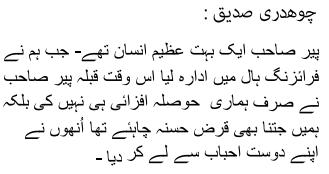
Chaudhry Siddique:
Peer Sahib was a very great person. At the time of establishing our institution in Frizinghall, Qibla Peer Sahib not only encouraged us, but he organised whatever karze- hassana we needed from his friends and relatives”
A Muslim brother:
“Qibla Pir Sahib built a mosque in every neighbourhood of Bradford and the light that he spread, even though Qibla Pir Sahib has left this world,this light will continue to shine.”
Qari Abdul Qayyum Naushahi:
“Today is the funeral of this person(Pir Sahib), in which people not only from the whole of Britain but also from Europe are coming to read his funeral – May Allah raise the status of Hazrat”
Mufti Jameel Sahib:
“Qibla Pir Sahib dedicated his entire life to religion and delivered the message of Allah and Rasool throughout his life.”
A Muslim brother:
“The world that is practicing literature, modesty, knowledge and action in this country today is the result of the efforts of Qibla Pir Sahib”
A Naushahi student:
“From the early sixties Pir Sahib worked tirelessly to compile and produce many volumes of Fatawa Rizvia, spending a great deal of money from his own pocket.”
Imran Hussain MP, Bradford East.
“When our elders came in the 50’s and 60’s; there were no rights in terms of religion. The work that Shaykh Mahroof undertook is still benefitting us today.”
Imam Qari Muhammad Asim, Senior Imam at Makkah Masjid, Leeds.
“Thousands of people have come together to remember his services to the wider British Muslim society”
Social Media Platform:
Facebook
Qari Muhammad Asim, Imam at Makkah Masjid (Leeds):
Muballigh-e-Islam (The Preacher of Islam), Peer-e-Tareeqat (Spiritual Leader), Peer Syed Mahroof Hussain Shah Arif Qadiri Naushahi of Bradford has passed away. May Allah Almighty elevate his status.
Qibla Pir Mahroof Hussain Shah sahib (RA) arrived in the UK in 1960’s, working in the mills during the day and teaching children and men at night. He founded Jamiyat Tabligh-ul-Islam movement to serve British Muslims in the UK. He was one of the pioneer generation who helped build the British Muslim community.
He was also amongst the founders and first convenors of the World Islamic Mission. For over 50 years, he had been involved in the activities for the promotion and preaching of Islam in Britain and other European countries.
He was an instrumental leader whose leadership, vision, dedication and perseverance brought together not only the local communities in Bradford but many across Britain.
In fact Peer Syed Mahroof Hussain Shah Arif Qadiri Naushahi lived a life of service, simplicity and humbleness. He was a towering figure who served with distinction and strength and was loved by thousands. He was of a pleasant character and had tremendous love for knowledge.
The British Muslim community will remember Qibla Peer Sahib fondly and give thanks for his lifetime of service.
Our sincere condolences to his beloved sons, Peer Syed Muhammad Ahsan Shah family, friends and followers.
May Allah Almighty accept their service elevate their ranks and grant highest station in Jannah-tul-Firdous.
Bradford
“No doubt its individuals like him who set up and nurtured our social and religious institutions that we now take for granted in Bradford and throughout UK. A huge loss to Pakistani diaspora in UK. May Allah almighty bless his soul. Ameen.”
Mohammed Ajeeb CBE, former lord Mayor of Bradford:
“I am extremely saddened by the news of demise of the great Muballigh-eIslam and spiritual Leader Peer Syed Mahroof Hussain Shah Arif Qadiri Naushahi who is no longer with us. Along-time friend whose enormous contribution to the promotion of Islam in Bradford, Britain and Europewhich I always appreciated and admired, has now departed to the eternal world. He had the God given gift of immense intelligence and knowledge of Islam that he used to spread the message of Islam during the whole of his earthly life. Being a great spiritual Leader, he was highly respected by Muslims and nonMuslims alike.
He was an ordinary mill worker during his days in Bradford. He was working and serving the community at the same time. Peer Syed Mahroof Hussain Shah Arif Qadiri Naushahi was blessed with humbleness, modesty and humility.May Allah reward him for his good deeds by granting the highest place in the garden of Jannah. AMEEN”
Anila Ahmed, a former councillor on Bradford Council:
“The huge loss to the community of Bradford and beyond. Pir Sahib was always complimentary and gave us so much praise when I worked at the council for mosques. He and the other elders including Uncle Sher Azam always ensured that they acknowledged us wherever they were. Gave us a huge boost to work even harder.”
Cllr Mohammed Shafiq, the Deputy Mayor of Bradford &District:
Inna lillahi wa innailayhiraji’un (Surely we belong to Allah and to Him shall we return).
“We are deeply saddened to hear about the passing of Hazrat Pir Syed Mahroof Hussain Shah. His contributions to the Muslim community in Bradford and beyond have been immense, and his legacy will continue to inspire many. May Allah (SWT) grant him Jannat al-Firdous and provide patience and strength to his family and loved ones during this difficult time. Ameen.”
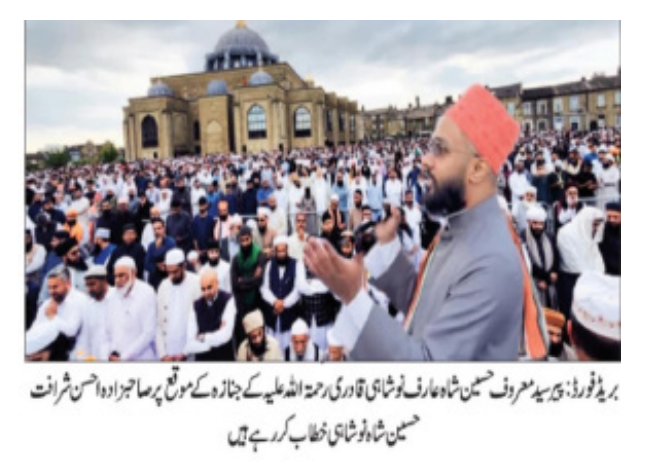
Concluding Words
I am profoundly saddened as many others are by the departure of our guide, our spiritual leader, our protector and our inspiration, His Eminence Hazarat Pir Syed Mahroof Hussain Shah Arif Qadiri Naushahi Sahib.
Pir Sahib was a giant of personality, a visionary blessed with boundless wisdom and a daring spirit to guide the Muslim Ummah. Pir Sahib has left an indelible imprint on the lives of his followers and community. He will be thoroughly missed but his legacy will continue to illuminate our lives.
Indebted to Maulana Liaqat Hussain Naushahi for suggesting that I shouldundertake take this arduous task of collecting and collating various strands of the media coverage regarding His Eminence Pir Sahib’s departure from this temporary abode to the eternally permanent abode.
Qazi Ishtiaq Ahmed, Bradford, U.K
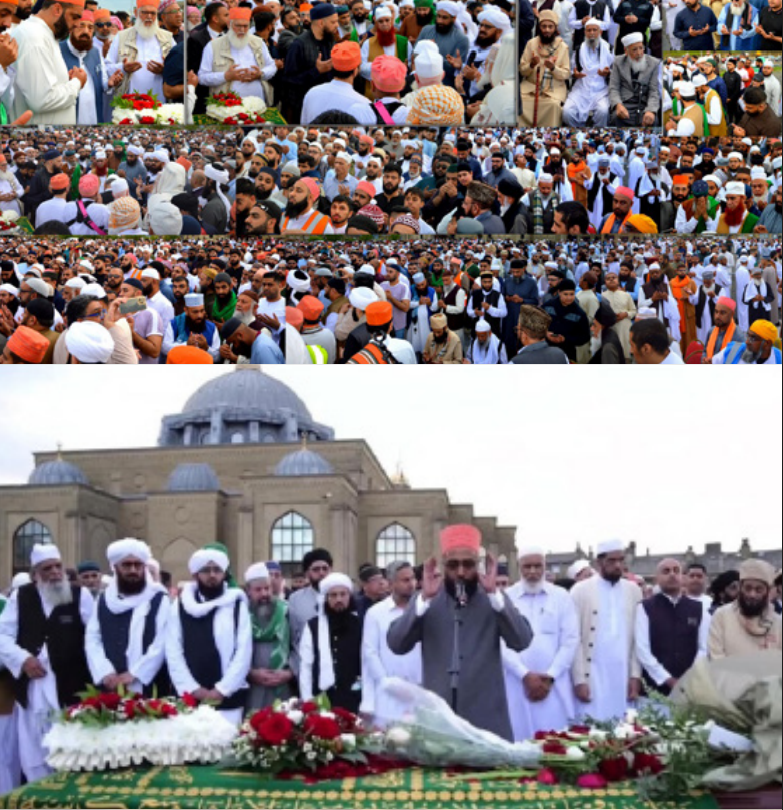
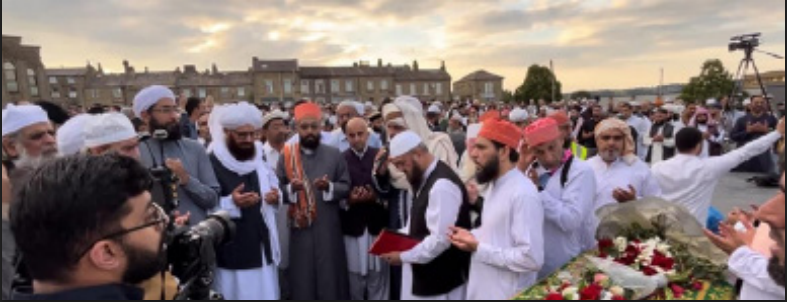
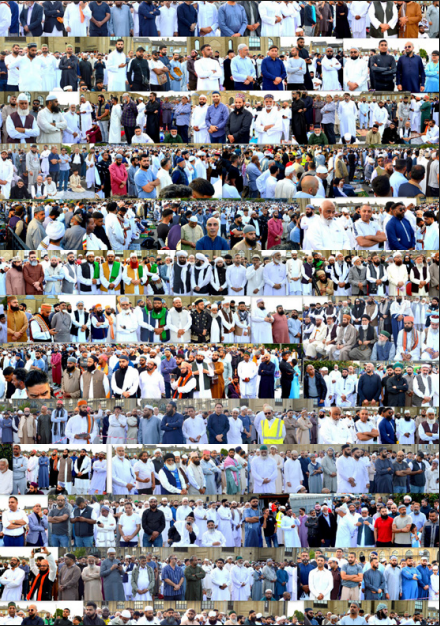
Your form has been submitted successfully.